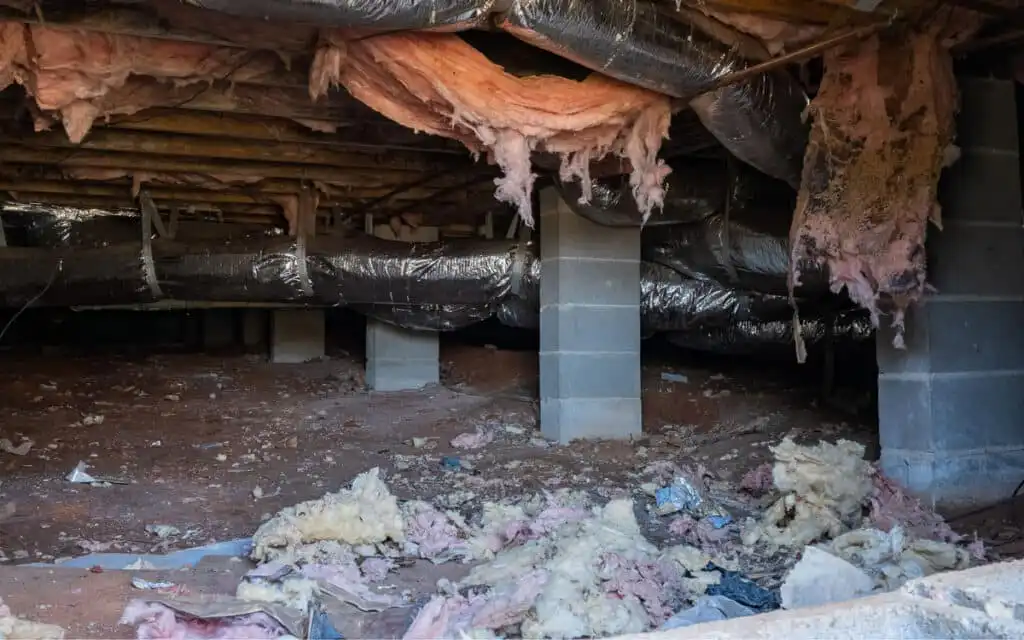
A hurricane that comes ashore on the Gulf Coast can carry heavy rain well into Alabama, far from where it made landfall. If your home sits over a crawl space, that rain doesn’t have to flood your street to reach the space under your floor. Water can pool on the dirt, soak into the insulation, and keep the air under your house damp for days after the skies clear.
Once it’s safe to go look, a check of your crawl space tells you whether the storm got in and how much needs to dry out. Standing water, soaked insulation, and a vapor barrier pulled loose are the things to look for. A sump pump or dehumidifier that lost power during the storm may also need a reset before it can go back to work.
What Causes a Crawl Space to Flood During a Hurricane
Gutters that overflow and downspouts that empty beside the foundation dump runoff right where the crawl space walls meet the ground. A yard that slopes toward the house sends even more water the same way. As the soil fills up, groundwater rises and seeps in through the foundation walls or up through a dirt floor. A vented crawl space adds one more path, letting warm, wet outside air drift in and condense on the cooler framing and ductwork under your floor.
The storm can also knock out the equipment meant to handle that water. A sump pump and a crawl space dehumidifier both run on electricity, so a power outage leaves water collecting and humidity climbing until the power returns and the equipment restarts. That moisture doesn’t stay under the house either, because warm air rising out of the crawl space carries it up into the rooms above.
Safety Hazards in a Flooded Crawl Space
Standing water in a crawl space can carry an electrical current, so stay out of it if any wiring, outlets, or equipment down there may have gotten wet. FEMA warns against touching electrical equipment while you’re wet or standing in water, and recommends having a licensed electrician inspect any wiring or equipment that was underwater before it goes back into service. According to the EPA, flood water can also carry sewage or chemicals, which is one more reason to look from the access door before you crawl in. If water reached ductwork or an HVAC unit under the house, the EPA advises against running that system to dry things out until a professional says it’s safe. A flashlight from the doorway tells you a lot, and anything past that can wait for someone with the right gear.
What to Check in Your Crawl Space After a Hurricane
Once a Gulf storm has cleared Alabama and the area around your access door is safe, a few minutes with a flashlight tells you how much water made it under the house. You can spot most of these from the doorway or from inside your home. If you find more than one, the crawl space needs to dry out quickly.
Standing Water on the Ground
Your flashlight catches a shine across the dirt, or a puddle sitting against the foundation wall. Even a shallow layer keeps the air under your floor wet long after the rain stops. A crawl space that collects water after heavy rain can have a drainage system and sump pump installed beneath the vapor barrier to carry it out.
Sagging or Fallen Insulation
The insulation between the floor joists hangs lower than it used to, or whole sections have dropped onto the ground. Fiberglass soaks up water, gets heavy, and pulls loose from the framing. Once it’s wet, it stops insulating your floor and holds moisture against the wood above it. Learn more about damp crawl space insulation.
A Vapor Barrier That Moved
The plastic sheeting across the floor has lifted, bunched against a wall, or has water pooled on top of it. A torn or shifted barrier leaves bare soil exposed, and that soil keeps releasing moisture into the space. Check the seams and the edges along the foundation walls, where water can push underneath. Learn more about crawl space vapor barriers.
A Sump Pump or Dehumidifier That Didn’t Restart
The pit has water in it but the pump sits silent, or the dehumidifier’s display is dark. Equipment that lost power during the storm doesn’t always come back on by itself. If the outlets and the ground around them are dry, check that both units are plugged in and running. If anything electrical got wet, leave it for an electrician.
A Damp Smell Inside the House
A day or two after the storm, the rooms over the crawl space smell musty, and the air feels heavier than it should. Warm air rising out of the crawl space carries moisture up into your living space, so a wet crawl space shows up in the rooms above it. Learn more about humidity in the home.
How Fast a Flooded Crawl Space Needs to Dry Out
The EPA advises drying a flooded home and everything in it within 24 to 48 hours, and assuming mold growth if you can’t. A crawl space works against that timeline, since it’s dark, closed in, and sitting on wet soil. Fans and dehumidifiers speed up drying, but the EPA warns against running fans once mold has started to grow, because they can spread it. Under the same guidance, anything that soaked up flood water and can’t be cleaned and dried in that window should be thrown away, and that can include the insulation between your floor joists.
When the storm has pulled down insulation or soaked the framing, drying the air is only part of the work. Wet insulation pressed against the joists keeps the wood damp, so it has to come out, and a vapor barrier that shifted needs to be reset so the ground stops feeding moisture back into the space. A dehumidifier sized for the crawl space then keeps the humidity down while everything finishes drying.
Schedule a Crawl Space Inspection After the Storm
If you found standing water, fallen insulation, or a vapor barrier knocked out of place, a SouthernDry Certified Foundation Specialist can inspect your crawl space for free and show you what the storm reached. SouthernDry has served homeowners across Alabama and West Georgia since 2004. Depending on what the inspection turns up, the plan can include a sump pump system to carry water out, spray foam insulation to replace what the water ruined, or full crawl space encapsulation to seal the space against the next storm. You’ll get a clear quote before any work begins.
Schedule your free crawl space inspection once the storm has passed and it’s safe to have someone look.