Summary:
- Foundation repair quotes in Alabama vary widely because the work itself varies. The systems required, the site conditions, and the extent of the damage all factor into what a project actually costs, and none of that can be determined without someone physically inspecting the foundation.
- SouthernDry addresses foundation problems through a range of systems grouped by what they do: push piers, helical piers, and slab piers for settlement and structural support; steel I-beam braces, helical tiebacks, and carbon fiber straps for bowing and lateral wall pressure; polyurethane crack injection, carbon fiber floor crack stitches, and full wall rebuild and replacement for cracking and advanced structural damage.
- Site conditions matter too. Crawl space clearance, basement finish level, sloped lots, existing landscaping, and prior repair work all affect how long a job takes and what it involves.
- SouthernDry backs every repair with the Guaranteed Solutions for Life™, which includes a lifetime warranty, money-back guarantee, product replacement for life, and Lifetime TotalCare™ Maintenance. The warranty transfers to new owners if the home is sold.
- Every estimate starts with a free inspection by a Certified Foundation Specialist. No scope gets built and no number gets presented until someone has seen the foundation in person.
What Does Foundation Repair Cost in Alabama?
Foundation repair quotes in Alabama can vary widely, and homeowners researching costs online rarely find a straight answer. That’s not an accident. What goes into a foundation repair project here is shaped by conditions specific to this state: clay-heavy soil that expands when it’s wet and contracts when it’s dry, seasonal weather patterns that stress foundations in ways that vary by region, and homes built on crawl space foundations that behave differently than slabs. A number pulled from a national average has almost nothing to do with what a specific home in Birmingham or Montgomery actually needs.
If a contractor gives you a price before seeing your home, that’s worth pausing on. Foundation repair isn’t a one-size-fits-all service, and any estimate worth trusting starts with someone physically inspecting the property.
What Foundation Repair Systems Are Used in Alabama?
SouthernDry’s repair work covers a wide range of conditions, and the system used on any given home depends on what the Certified Foundation Specialist finds during the inspection. The services break down into three broad categories based on what’s happening with the structure.
Foundation settlement and structural support involves moving or stabilizing a foundation that has shifted due to soil movement. Push piers are hydraulically driven steel sections installed through unstable soil until they reach load-bearing ground below. Helical piers are screwed into stable soil rather than driven, making them suited to different soil conditions and structure types. Slab piers address settlement specifically in concrete slab foundations from below.
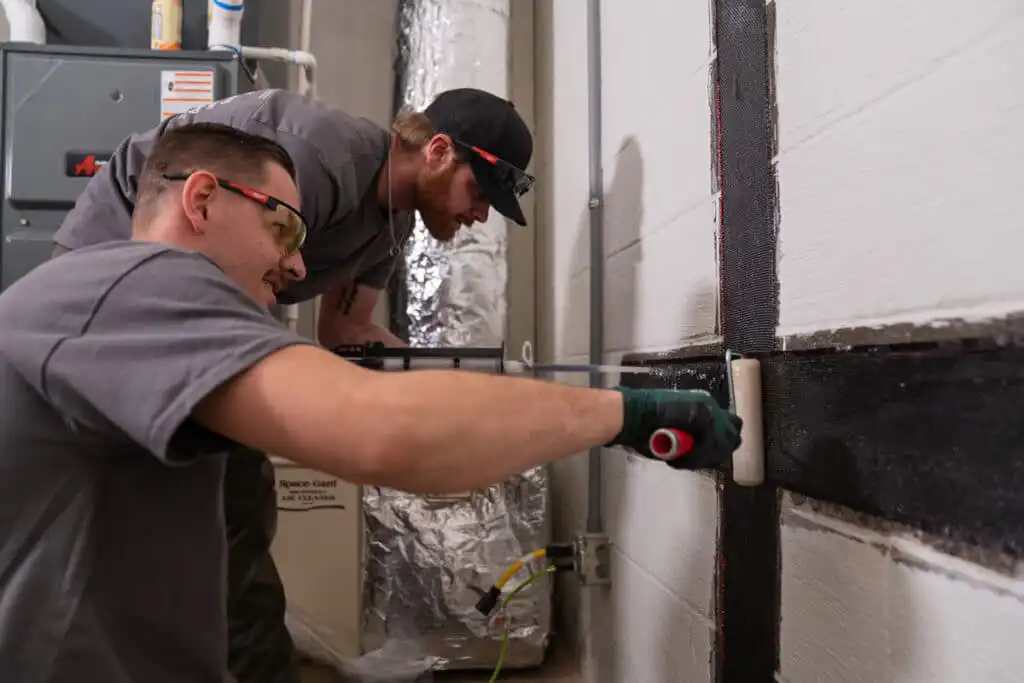
Bowing, leaning, and lateral wall pressure requires systems that resist the inward movement of foundation walls. Steel I-beam braces anchor from the floor to the floor joist above to hold a wall in place. Helical tiebacks go through the wall and anchor into the soil outside, actively pulling the wall back. Carbon fiber straps bond directly to the wall surface to prevent further movement without excavation.
Cracks, wall damage, and structural rebuilding covers a range from minor repairs to full reconstruction. Polyurethane wall crack injection fills and seals cracks from within the wall. Carbon fiber floor crack stitches address cracking in concrete floors. For walls that have deteriorated beyond repair, basement wall rebuild and replacement addresses the damage at its most advanced stage. Basement lowering and dig-out services are available for homes that need that extra space.
The scope of any project, and by extension its cost, depends on which of these systems is needed and how much work is involved in the installation.
How Site Conditions Affect Foundation Repair Costs in Alabama
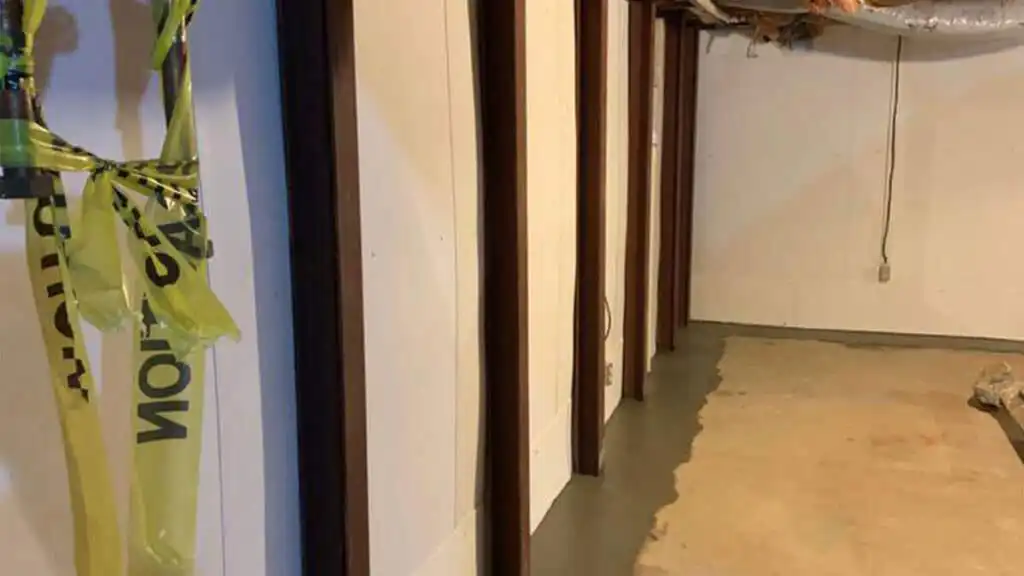
The physical conditions of a home directly affect how repair work gets done and how long it takes. A crawl space with limited clearance takes longer to work in than one with adequate room to move. A finished basement changes what’s involved in accessing the foundation walls. Homes on sloped lots, properties with mature landscaping close to the foundation, and houses where previous repair work has already been done all present conditions that affect the installation process.
Whether a home has a basement, a crawl space, or a slab foundation also factors in. Each foundation type presents different access points and different constraints for the systems being installed. A Certified Foundation Specialist accounts for all of it during the free inspection before any scope gets built.
What the Guaranteed Solutions for Life™ Means for Your Investment
Foundation repair is not a purchase most homeowners make more than once. What backs the work matters as much as the work itself.
SouthernDry’s Guaranteed Solutions for Life™ covers more than the initial repair. The lifetime warranty means the fix is expected to hold, and if it doesn’t, SouthernDry stands behind it. The money-back guarantee means the investment isn’t at risk. Product replacement for life covers the mechanical components of any system, sump pumps, dehumidifiers, stabilizers, replaced at no charge if they fail. The Lifetime TotalCare™ Maintenance program keeps the system monitored and maintained so problems get caught before they become failures.
That warranty transfers to new owners if the home is sold, which adds documented value to the property at the point of sale.
A repair backed by those terms is a different investment than one backed by a standard contractor warranty or nothing at all, and it’s part of what a cost comparison between SouthernDry and other contractors should account for.
What Determines the Cost of Your Foundation Repair?
The largest factor is the system the repair calls for, and what’s wrong with the foundation decides that. Sealing cracks with polyurethane injection and stabilizing a settling foundation on push piers are different scales of work, each with its own material and labor behind it. A wall held with carbon fiber straps is a different scope than one that needs helical tiebacks anchored into the soil outside. A wall that’s deteriorated to the point of a full rebuild is different again. The inspection exists to pin down which of these a home needs, because that one decision moves the number more than anything else.
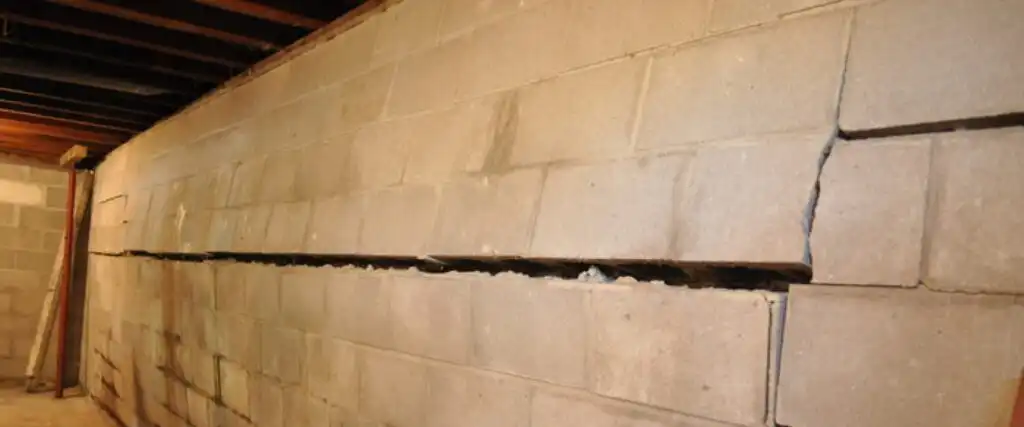
How far the problem has progressed matters nearly as much. A bowing wall addressed while the movement is still slight takes a lighter system than one left to deflect for years. Settlement found early can sometimes be corrected with fewer piers than a foundation that’s dropped unevenly along its whole length. Damage caught sooner means a smaller scope and a lower number, which is the real reason to act on the early warning signs instead of waiting them out.
A Free Inspection Is the Only Way to Get an Accurate Number
SouthernDry’s Certified Foundation Specialists inspect every home before any scope is built or any number is presented. The inspection is free, there’s no obligation to move forward, and the estimate that follows reflects what the home actually needs. For Alabama homeowners in Birmingham, Huntsville, Montgomery, Tuscaloosa, and the surrounding areas, schedule your free inspection today.