Summary
Crawl space mold creates costs in several categories that most homeowners don’t anticipate when they first notice a problem. This post covers what mold and fungal decay do to wood framing over time, how active mold affects home value and sale negotiations in Alabama, what the air quality connection means for the people living in the house, and how crawl space encapsulation removes the moisture conditions that allow mold to establish and return.
The Cost of Having Mold in Your Crawl Space
A little mold in the crawl space. That’s how most homeowners file it away when it comes up during an inspection or when they catch a glimpse of something dark on the floor joists during a quick look underneath. It doesn’t feel urgent the way a flooded basement does, and because it’s out of sight, it tends to stay out of mind.
The problem is that crawl space mold doesn’t stay contained to the crawl space, and it doesn’t stay small. Alabama’s combination of warm temperatures, high humidity, and wet springs gives mold exactly the conditions it needs to spread through a crawl space year-round. What starts as a patch on one joist can work its way across the framing over a single season. And the longer it goes without being addressed, the more categories of cost it creates.
What Mold Does to Wood Framing Over Time
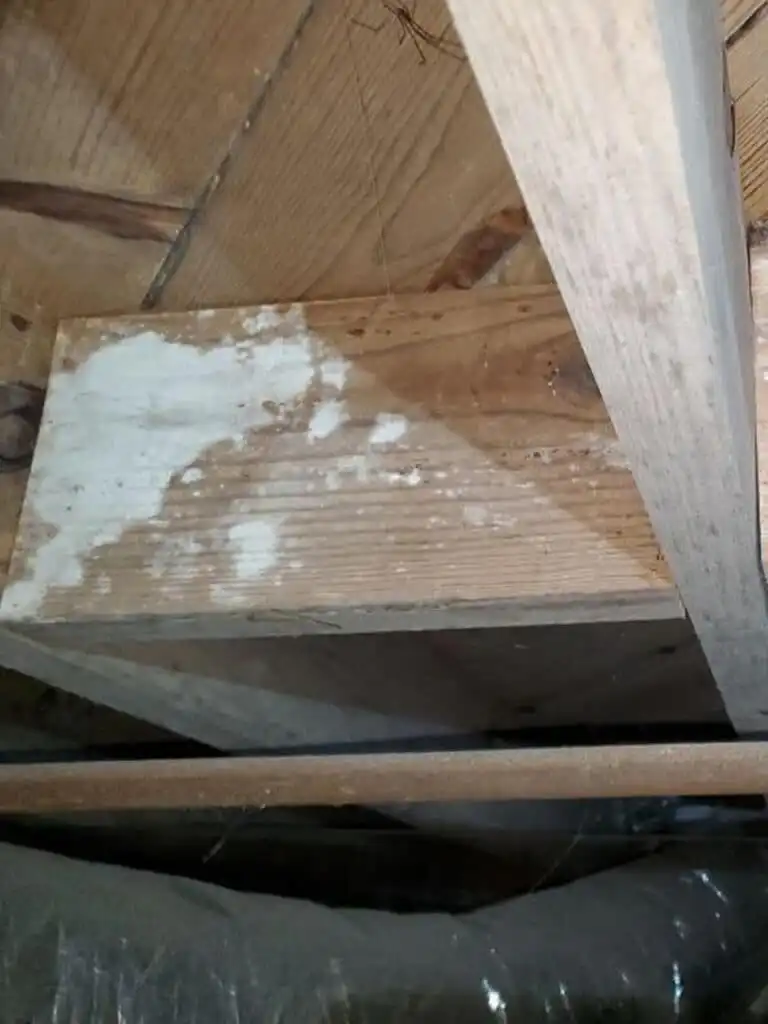
Mold and wood rot are related but not the same thing. Mold grows on the surface of wood and spreads readily in damp conditions. Wood rot, specifically the fungal decay that follows prolonged mold exposure, breaks down the wood’s structure from within. A floor joist with surface mold is a problem. A floor joist with active fungal decay is a structural one.
In a crawl space where moisture has never been controlled, both tend to be present. The subfloor panels directly above bare soil are usually the first to show decay, followed by the floor joists they rest on. Homeowners notice it upstairs as soft spots underfoot, a slight give in the floor that wasn’t there before, or in more advanced cases a visible sag in the floor surface.
The repair cost difference between catching this early and catching it late is significant. Surface mold on structurally sound joists can often be addressed with remediation alone. Joists that have softened and lost load-bearing capacity need to be sistered or replaced entirely, which involves labor, materials, and in some cases temporary support while the work is done. The longer fungal decay has been active, the more framing it affects and the more involved the repair becomes.
What Crawl Space Mold Does to Your Home’s Value
Mold in a crawl space is a disclosure item in Alabama, and buyers and their inspectors look for it. When it shows up in an inspection report during a sale, it rarely stays a small line item. Buyers use it as leverage, sellers face pressure to either remediate before closing or accept a reduced offer, and in some cases deals fall through entirely when the extent of the damage is worse than expected.
The negotiation hit tends to be larger than the actual repair cost. A buyer facing an unknown remediation expense will often ask for more than the job would actually cost, because from their perspective they are absorbing both the expense and the uncertainty. Sellers who address mold before listing avoid that dynamic entirely and give buyers one less reason to walk away or push back on price.
Homes that have had repeated moisture problems without resolution can also face complications with financing. Some lenders require mold remediation to be completed before closing as a condition of the loan, which puts the timeline and cost squarely on the seller regardless of where negotiations started.
What Mold in the Crawl Space May Mean for Your Family’s Health
Crawl space air doesn’t stay in the crawl space. The stack effect pulls air upward through gaps in the floor structure continuously, and in a home with active mold growth below, that air carries spores into the living space above. Homeowners with mold in their crawl space sometimes report persistent musty odors, increased allergy symptoms, or respiratory irritation that they can’t trace to an obvious source.
People with existing sensitivities to mold, asthma, or respiratory conditions may notice these effects more readily. Children and older adults can also be more susceptible. If people in your home have been dealing with symptoms without a clear explanation, the crawl space is worth having inspected.
Encapsulation Removes the Conditions Mold Needs to Grow
Mold remediation treats what’s already there. Encapsulation addresses why it was able to grow in the first place. In Alabama’s climate, an open crawl space with bare soil and foundation vents pulling in humid outside air is going to have moisture problems. Treating mold without changing those conditions is a temporary fix.
Crawl space encapsulation seals the floor and walls of the crawl space with a heavy-duty vapor barrier, cutting off the ground moisture that mold depends on. Combined with a dehumidifier to maintain humidity at levels that inhibit mold growth, an encapsulated crawl space stops being the kind of environment where mold can establish itself. Wood that stays dry doesn’t decay, and spores that can’t find moisture can’t colonize.
For Alabama homeowners who have already had mold remediated, encapsulation is what keeps it from coming back. For those who haven’t had a problem yet, it’s what keeps the conditions from developing into one.
Get a Free Crawl Space Inspection from SouthernDry
Crawl space mold is easier and less expensive to address early than after it has spread through the framing and saturated the insulation. SouthernDry offers free crawl space inspections across Alabama, Georgia, and Tennessee. Their specialists will assess the condition of your crawl space, explain what they find, and give you a clear picture of what remediation and encapsulation would involve before you spend anything.