Quick Summary:
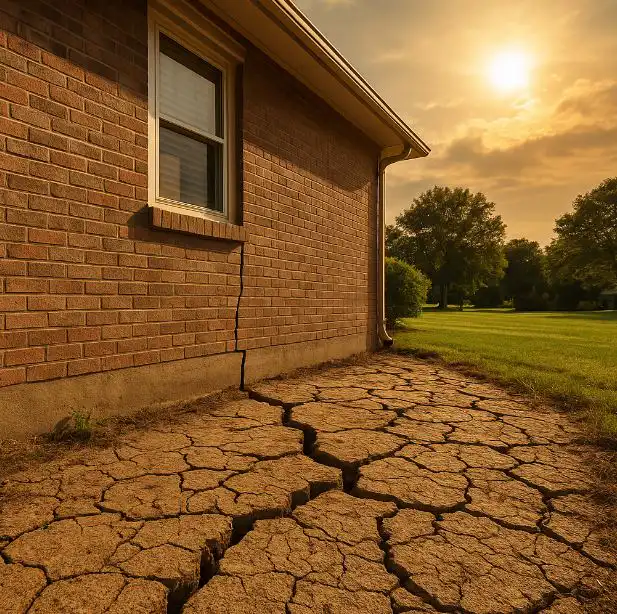
- Alabama’s clay soil gets its stability from moisture. When a drought runs long enough, that moisture drops, the clay shrinks, and the ground pulls away from footings and pier bases. This leaves foundations spanning voids they weren’t built to handle.
- Crawl space framing takes the hit from two directions. Soil movement shifts the supports below, and the wood itself dries out as the ground moisture drops. When the drought breaks and humidity returns, that dried-out framing is exactly what mold needs to get established.
- Warning signs show up inside the house first: diagonal cracks at door and window corners, doors that bind in their frames, floors that feel soft or have developed a slope, and stair-step cracks working through exterior brick.
- Drought damage doesnt stabilize when the rain returns. Soil re-expands unevenly, pushing against a foundation that has already moved, and cracks that held through the dry months can widen in the fall.
- SouthernDry addresses drought damage through foundation piering that reaches past the affected soil zone, crawl space encapsulation that protects framing through both dry and wet seasons, and wall stabilization for structures that have already shifted. All of it is backed by their Guaranteed Solutions for Life warranty and starts with a free inspection.
How Drought Conditions Damage Your Foundation and Crawl Space in Alabama
When Alabama goes dry for weeks at a stretch, the clay soil that underlies most of the state starts to shrink. It pulls back from foundation walls, contracts beneath slabs, and leaves gaps where there used to be firm ground. Foundations that were built into stable soil are suddenly spanning voids they weren’t designed for, and the structure above begins to reflect that. Cracks appear along wall seams, floors lose their level, and doors that fit their frames in the spring start binding by late summer.
The connection between dry weather and foundation damage isn’t obvious to most homeowners, and that’s part of what makes it costly. Drought damage doesn’t come with a visible leak or a puddle on the floor. It accumulates over a season, and the warning signs that do appear are easy to dismiss as minor settling until the repair scope says otherwise.
What Alabama Drought Does to Clay Soil
Clay soil gets its strength from moisture. At normal levels it’s dense and stable, which is why foundations built into it hold position for decades without issue. When a drought runs long enough, that moisture drops, the clay shrinks, and the ground that was once in firm contact with footings and pier bases pulls away. The foundation doesn’t have anything dramatic happen to it. It just loses the support it was counting on, gradually, across the driest parts of the footprint first.
What matters for Alabama homeowners is how deep that drying can go. A dry week affects the surface and recovers when it rains. A drought that runs through the summer pushes the drying front much deeper, into soil layers that don’t normally lose much moisture at all. When those deeper layers shrink, foundations that have been stable for years start to move, and the movement shows up unevenly because the soil doesn’t dry at the same rate everywhere under the house. One corner settles while another holds. A section of wall cracks while the adjacent section stays intact. The house is telling you where the soil moved.
What Drought Conditions Do to Your Alabama Crawl Space
Most Alabama homes are built on crawl space foundations, and crawl spaces are where drought damage tends to concentrate. The wood framing that supports the floor system sits just above the ground, and when the soil beneath it dries and shifts, that framing moves with it. Beams that were sitting level on their supports start to sag when a post shifts or a pier loses contact with the ground below it. Floors above begin to feel soft in spots, or develop a slope that wasn’t there before.
Drought also does something less obvious to crawl spaces. As the soil dries, it releases less moisture vapor into the crawl space air. That sounds like a good thing, but the wood framing has been acclimated to a certain humidity level over the life of the structure. When that drops sharply, the wood dries out and shrinks, which can open gaps in the framing, loosen connections, and add movement to a floor system that was already being stressed by soil shifts below.
The bigger concern comes when the drought breaks. When humidity returns to Alabama in force, an unsealed crawl space absorbs that moisture rapidly. Wood that dried out during the drought is now exposed to elevated humidity, and that’s the condition mold needs to get established. A crawl space that came through the dry period with compromised framing and no vapor barrier is vulnerable in both directions, and the transition from drought to wet season is often when homeowners first notice something is wrong.
Foundation Warning Signs Alabama Homeowners Shouldn’t Ignore During Drought
Drought damage shows up inside the house before most homeowners think to look at the foundation. The signs are easy to rationalize individually. A door that started sticking gets blamed on humidity. A crack along a wall seam gets painted over. A floor that feels slightly soft in one spot gets a rug thrown on it. Taken together, those observations point to soil movement that has been building for months.
The warning signs worth paying attention to include:
- Cracks along wall seams or at door and window corners. Diagonal cracks running from the corners of door and window frames are a consistent indicator of differential settlement. The framing is racking because the foundation beneath it has moved unevenly.
- Doors and windows that stick or won’t latch. When a foundation shifts, door and window frames go out of square. A door that fit its frame in the spring and binds by late summer is worth noting, not adjusting.
- Floors that feel soft, bouncy, or sloped. In crawl space homes, floor movement often traces back to a support post that has shifted or a beam that has lost its bearing. A slope that develops gradually is easy to miss until it becomes pronounced.
- Gaps between walls and ceilings or floors. Separation at those junctions means the structure is moving in different directions. That kind of movement doesn’t stop on its own.
- Cracks in exterior brick or block. Stair-step cracks in brick veneer follow the mortar joints and indicate the wall section is dropping. They’re one of the more visible signs of foundation settlement from the outside.
None of these signs confirm a specific cause on their own, and some have explanations unrelated to the foundation. What they share is that they tend to worsen over time when the underlying cause is soil movement, and a free inspection from a Certified Foundation Specialist is the only way to know what’s actually driving them.
Why Alabama Homeowners Shouldn’t Wait on Foundation Repairs After a Drought
Soil that dried out over the summer doesn’t re-expand evenly when rain returns. It swells at different rates in different spots, and a foundation that already shifted during the drought now has new pressure coming at it from inconsistent directions. Cracks that were stable through the dry months can widen in the fall. Walls that held position all summer can start to bow once the ground pushes back.
Delay has a compounding effect on crawl spaces specifically. Wood framing that dried out over the summer becomes more vulnerable once humidity returns, and a crawl space that lost structural integrity during the drought is poorly positioned to handle that transition. Getting encapsulation and dehumidification in place before the wet season arrives is a different conversation than addressing active mold and compromised framing after the fact.
Drought years in Alabama also tend to run in patterns. A summer that stresses a foundation once is likely to be followed by conditions that stress it again. Each cycle moves the structure a little further from where it started, and the repairs reflect that.
How SouthernDry Repairs Drought-Related Foundation and Crawl Space Damage
When soil movement has caused a foundation to settle or shift, the repair has to address what’s happening below the surface, not just what’s visible above it. SouthernDry’s Certified Foundation Specialists inspect each home individually before recommending a repair approach, because drought damage doesn’t present the same way on every foundation. A crawl space home on a hillside in Tuscaloosa fails differently than a slab home on flat ground outside Montgomery, and the repair plan reflects that. The services below cover the most common conditions SouthernDry addresses after drought stress.
- Foundation piering and stabilization. For foundations that have settled or shifted, SouthernDry uses piering systems that reach past the drought-affected soil zone and transfer the structure’s load to stable ground deeper down. That stops the movement at its source rather than treating the symptoms in the walls and floors above.
- Crawl space encapsulation. A fully encapsulated crawl space cuts off the moisture exchange between bare ground and the wood framing above it, which addresses both the drying-out problem during drought and the mold vulnerability that follows when humidity returns.
- Wall stabilization and crack repair. For homes where drought stress has already shown up in the structure, carbon fiber straps, steel braces, and targeted crack repair address the damage that accumulated and prevent it from progressing further.
SouthernDry’s inspections are free, and the repair scope is determined by what the specialist finds on site, not by a preset package.
Why Alabama Homeowners Choose SouthernDry
Choosing a foundation contractor is a different decision than hiring someone to replace a roof or repaint a room. The work is largely out of sight, the stakes are high, and the warranty is only as good as the company standing behind it. SouthernDry has been operating in Alabama since 2004, and their track record with homeowners across the state is documented through more than 600 five-star reviews across Google, Facebook, and the BBB. Their Better Business Bureau accreditation reflects a consistent record of resolving customer concerns and operating with transparency.
The warranty SouthernDry backs their work with is called the Guaranteed Solutions for Life, and it covers more than the initial repair. Sump pumps, dehumidifiers, and other system components are replaced at no charge if they fail, and the warranty transfers to new owners if the home is sold. For homeowners who are weighing a repair against a future sale, that transferability has real value.
Every job starts with a free inspection and a written estimate. SouthernDry’s Certified Foundation Specialists explain what they find, walk the homeowner through the options, and don’t use the inspection as a pressure tactic. That approach, combined with financing options for homeowners who need them, is a significant part of why the company has built the reputation it has across Alabama.
Don’t Wait on Alabama Foundation Problems
Drought damage doesn’t stay where it starts. What shows up as a sticking door or a crack along a wall seam in August is the surface record of soil movement that has been building for months, and the wet season that follows will test a foundation that is already out of position. The sooner a specialist looks at it, the clearer the picture and the more straightforward the repair.SouthernDry offers free inspections with written estimates across Alabama. Schedule yours today and find out exactly what your foundation is dealing with before conditions change again.